


What the change of season reveals about pigmentation, barrier function and recovery.
An Editorial Note / 6 minute read / September 2026

Most of what summer does to the skin does not end with summer.
Across months of longer days, repeated ultraviolet exposure influences pigmentation, oxidative stress and the biological processes that maintain healthy skin. Some of those changes appear quickly; others take far longer to become visible. Then the season turns, and by September the picture shifts: tone may look less even, dark spots seem more pronounced, texture less refined.
"As temperature and humidity begin to change, skin that felt balanced only weeks earlier can suddenly feel dry, tight or reactive."
Autumn does not create all of these changes. It reveals them.
Understanding what has changed — and what the skin needs next — is where an intelligent seasonal routine begins.
Why summer pigmentation can appear later
The tan that develops after sun exposure is not simply a change in colour; it is part of a complex biological response to ultraviolet radiation.
UV influences pigmentation through several pathways. UVB can cause DNA damage within the keratinocytes, activating a protein called p53 and a signaling cascade involving α-melanocyte-stimulating hormone. That signal reaches the melanocytes — the cells responsible for producing pigment — and stimulates melanogenesis, after which the newly produced melanin is transferred into the surrounding keratinocytes.¹
It is, in the most literal sense, a protective response: melanin absorbs ultraviolet radiation and helps shield cellular DNA from further exposure. But not every part of that response appears immediately. Delayed tanning develops over the days and weeks after exposure, and pigmentation produced or intensified across an entire summer can remain visible long after any single day in the sun has been forgotten.²
This is why September can seem to reveal what August left behind. Uneven tone becomes more noticeable, existing dark spots look deeper, and the areas most repeatedly exposed to light — the cheekbones, forehead, décolleté and hands — begin to tell the story of accumulated exposure. The skin is not suddenly changing because summer has ended; it is showing the history of the season.
We explore the relationship between ultraviolet exposure, pigmentation and photoaging more deeply in [The Memory of Light →]
The barrier changes with the season, too
Pigmentation is only the visible half of the transition. At the surface of the skin sits the stratum corneum — a remarkably thin structure responsible for limiting water loss while helping protect the tissues beneath it from the outside environment. Its effectiveness depends in large part on the organization of lipids surrounding the corneocytes, principally ceramides, cholesterol and free fatty acids. These lipids are not cosmetic extras; they are part of the architecture of the barrier itself.
Research examining skin across seasons has found changes in stratum-corneum lipid composition, hydration and trans-epidermal water loss, though the precise pattern varies according to body site, climate and population. Some studies have found substantially lower levels of the major stratum-corneum lipids, particularly ceramides, in winter than in spring and summer; other work has demonstrated seasonal shifts in specific ceramide species and clear relationships between ceramide profiles, hydration and barrier function.³ ⁴
The environment changes at the same time: cooler air, lower humidity, heated interiors, and constant movement between the two. As the surrounding air becomes drier, the skin is asked to retain water under increasingly challenging conditions—just as its barrier lipid composition may also be changing with the season.
The result is familiar — skin that feels tight after cleansing, a surface that turns rougher, moisture that seems to disappear more quickly, redness provoked more easily, and products that felt comfortable through summer suddenly feeling less so. These are not unrelated complaints. They are the same barrier, under-supplied and over-drawn, showing the strain. And they do not necessarily mean the skin needs more. They may mean it needs something different.
The Autumn Reset
Restore. Correct. Protect.
Seasonal skincare is often approached by addition. A richer cream. Another serum. Another active. But the more useful question is not what should be added? It is: what has changed in the skin?
After summer, three needs begin to converge: supporting barrier function as environmental conditions shift, addressing the pigmentation and texture accumulated through months of greater exposure, and continuing to defend the skin against ultraviolet and oxidative stress. There is an order to this — and the order matters.
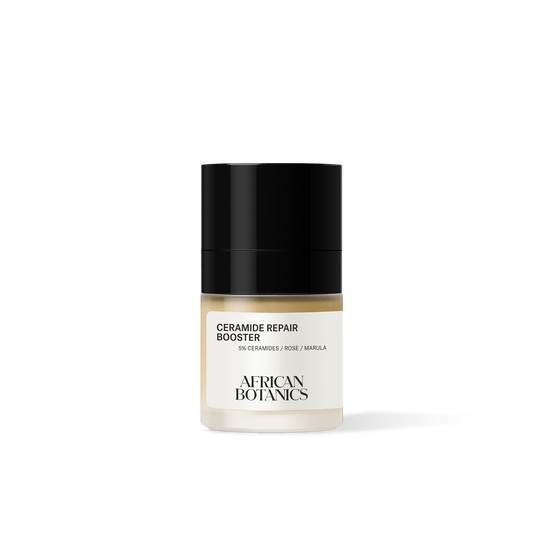
01 — Restore. Begin with the barrier. Before intensifying a routine, consider the condition of the skin that will receive it. A well-functioning stratum corneum limits water loss and helps the skin tolerate both environmental and topical stress; when barrier function is compromised, even a carefully chosen active can feel uncomfortable. This is why autumn correction should not begin with aggression, but with restoration. Ceramides, cholesterol and physiologically compatible lipids help support the barrier environment, humectants help attract and retain water, and well-designed emollient systems reduce the sensation of dryness as ambient humidity falls. This does not mean waiting for the skin to become visibly dry — barrier support is most intelligent before discomfort becomes the signal.
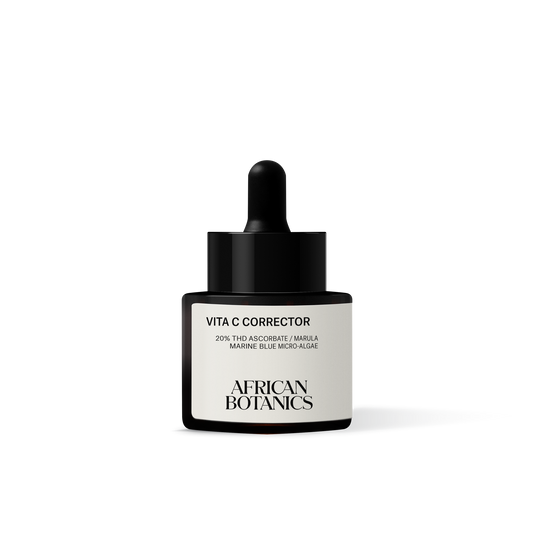
02 — Correct. Once the barrier is supported, autumn becomes a natural moment to reassess tone, texture and luminosity. Vitamin C has particular relevance here—not because it belongs to a particular season, but because its antioxidant, anti-pigmentary and collagen-supporting functions make it especially useful when addressing the visible effects associated with cumulative environmental exposure. The research also supports its role as an adjunct to photo-protection: it complements sunscreen rather than replacing it.⁵ Renewal ingredients address another part of the picture. Retinoids are among the most studied topical ingredients for photoaging, with evidence supporting improvements in fine wrinkles, texture and hyperpigmentation; some are also photolabile, which is one reason such formulations are commonly used in the evening, with appropriate daytime protection remaining essential.⁶ But correction should never become a competition for intensity.
More renewal, and more actives do not produce healthier skin. The objective is to improve the conditions in which skin can renew itself—not to repeatedly challenge its ability to recover.
Correction works best when the barrier is part of the strategy.
03 — Protect. Autumn light is still light. Shorter days can create a false sense that photo-protection belongs to summer, but ultraviolet exposure remains relevant throughout the year — and continued protection matters most precisely when the goal is to improve visible pigmentation and preserve the gains of a corrective routine. Antioxidants can complement that strategy by helping to address oxidative stress, but they are not substitutes for broad-spectrum sunscreen. Protection is not the final step because the work is finished. It is what allows the work to continue.
The intelligence of seasonal skincare
Skin does not experience the calendar. It experiences light, temperature, humidity, environmental stress, and the cumulative consequences of everything that came before. This is why an intelligent routine should not stay identical simply because its products are familiar — nor be rebuilt from nothing every three months. The purpose of seasonal skincare is subtler than either: to notice when the conditions surrounding the skin have changed, and to adjust the conditions we create for it in return.
At African Botanics, this is central to the way we think about formulation. Healthy skin does not depend on a single pathway or one celebrated ingredient; barrier lipids, antioxidants, peptides, humectants, bio-adaptive botanicals and advanced biotechnology each address a different aspect of skin function. The formulation matters because the relationship between them matters. The same is true of a routine: restore before overwhelming, correct without compromising, protect what you are working to improve.
The reset is not about more
Autumn is often presented as the moment to overhaul a skincare routine. We see it differently. The change of season is an opportunity to observe — to notice what summer left behind, to recognize what the coming environment will ask of the skin, and to respond before imbalance becomes visible.
Restore what changing conditions may deplete. Correct what accumulated exposure has made visible. Protect what the skin is rebuilding.
Because the most intelligent seasonal routine is not the one with the most steps. It is the one that understands what the skin needs now.
The Autumn Protocol
01 · RESTORE — Barrier support · Lipid replenishment · Hydration
Ceramide Repair Booster
02 · CORRECT — Uneven tone · Texture · Visible photoaging
Vita C Corrector — day
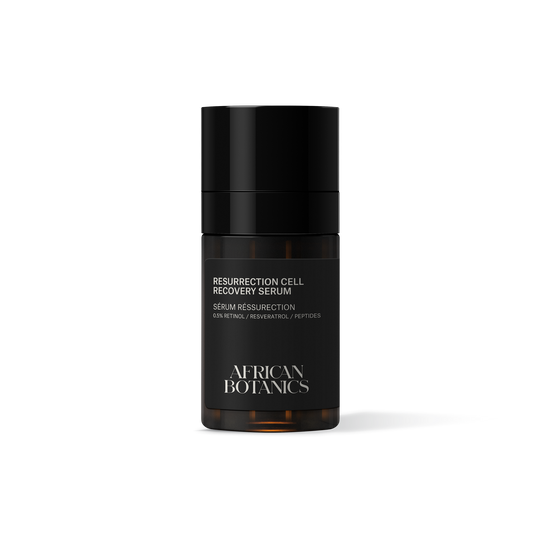
Resurrection Cell Recovery Serum — evening
03 · PROTECT — Barrier resilience · Comfort · Recovery
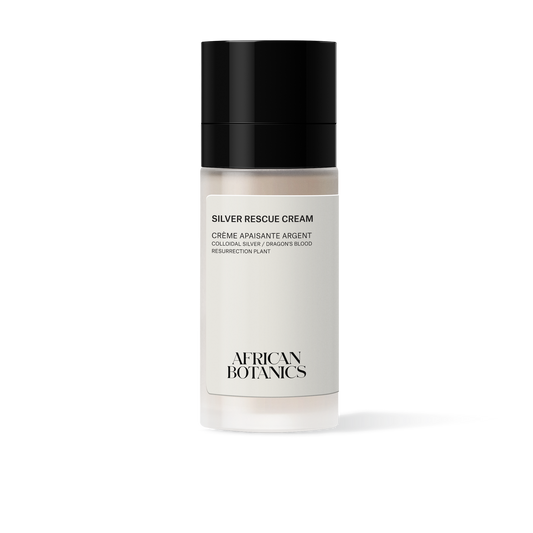
Silver Rescue Cream
Frequently Asked Questions
Why do dark spots look worse after summer?
Repeated UV exposure can stimulate increased melanin production, and some pigmentation develops gradually rather than appearing immediately after sun exposure. As a result, uneven tone and dark spots accumulated over summer may remain visible or appear more noticeable into early autumn.
How should I change my skincare routine in autumn?
As temperature and humidity change, focus first on supporting hydration and the skin barrier. Once the skin is comfortable and resilient, targeted treatments can address uneven tone and texture while daily broad-spectrum sun protection continues. A useful autumn approach is simple: restore, correct and protect.
Should I use vitamin C after summer?
Vitamin C can be used year-round and is particularly relevant when addressing uneven tone and the visible effects of environmental exposure. As an antioxidant, topical vitamin C can help defend against oxidative stress and complement daily photoprotection. When used in the morning, it should be followed with broad-spectrum sunscreen.
Why does my skin become dry when the seasons change?
Lower humidity, cooler temperatures and heated indoor air can increase moisture loss from the skin. Research has also identified seasonal changes in stratum-corneum lipids, including ceramides, although these vary by climate, body site and individual. Together, these changes can leave skin feeling tighter, rougher or more reactive.
Should I support my skin barrier before using retinol or other actives?
A well-supported skin barrier generally tolerates active ingredients more comfortably. If the barrier is already compromised, retinoids, exfoliating acids and other potent treatments may be more likely to cause dryness, stinging or irritation. Supporting hydration and barrier lipids first can create a better foundation for a corrective routine.
Is sun protection still necessary in autumn and winter?
Yes. Ultraviolet exposure occurs throughout the year, even when temperatures fall. Daily broad-spectrum sun protection remains particularly important when addressing uneven pigmentation or using treatments intended to improve visible signs of photoaging.
REFERENCES
1. Yardman-Frank JM, Fisher DE. Skin pigmentation and its control: From ultraviolet radiation to stem cells. Experimental Dermatology. 2021;30(4):560–571. doi:10.1111/exd.14260.
2. Conti A, Rogers J, Verdejo P, Harding CR, Rawlings AV. Seasonal influences on stratum corneum ceramide 1 fatty acids and the influence of topical essential fatty acids. International Journal of Cosmetic Science. 1996;18(1):1–12. doi:10.1111/j.1467-2494.1996.tb00131.x.
3. Pappas A, Kendall AC, Brownbridge LC, Batchvarova N, Nicolaou A. Seasonal changes in epidermal ceramides are linked to impaired barrier function in acne patients. Experimental Dermatology. 2018;27(8):833–836. doi:10.1111/exd.13499.
4. Green M, Kashetsky N, Feschuk A, Maibach HI. Transepidermal water loss (TEWL): Environment and pollution—A systematic review. Skin Health and Disease. 2022;2(2):e104. doi:10.1002/ski2.104.
5. Al-Niaimi F, Chiang NYZ. Topical Vitamin C and the Skin: Mechanisms of Action and Clinical Applications. Journal of Clinical and Aesthetic Dermatology. 2017;10(7):14–17.
6. Mukherjee S, Date A, Patravale V, Korting HC, Roeder A, Weindl G. Retinoids in the treatment of skin aging: an overview of clinical efficacy and safety. Clinical Interventions in Aging. 2006;1(4):327–348. doi:10.2147/ciia.2006.1.4.327.
