


An Editorial Note on what skin does in the days after sun exposure ends.

Most of what damages skin from sun exposure does not happen while you are in the sun. It happens in the hours, days, and weeks afterward.
This is one of the most consistently misunderstood facts in modern skincare, and it is where the entire architecture of a summer ritual should be built. The visible surface is the last place to register what has already begun. The molecular events that produce photoaging — DNA damage, mitochondrial fragmentation, matrix metalloproteinase upregulation, oxidative cascades in the dermis — unfold on a timeline that extends well past the exposure itself.
UVB damage propagates in the first minutes. Cyclobutane pyrimidine dimers form directly in DNA as ultraviolet light is absorbed, and the cell begins nucleotide excision repair almost immediately. This repair is not instantaneous. It continues for hours after the last exposure, and some lesions persist unrepaired for days. The cells that inherit those lesions carry forward the damage as they divide.
UVA damage unfolds over a longer timeline. The reactive oxygen species generated in the dermis by absorbed UVA photons continue to propagate for hours after exposure ends. These oxidants degrade cell membranes, denature structural proteins, and damage mitochondrial DNA — a class of damage that has less robust repair than nuclear DNA and accumulates across a lifetime. The matrix metalloproteinases that break down collagen in response to this oxidative signal remain elevated for approximately 24 to 72 hours, sometimes longer.
The practical implication is that summer skincare is not a daytime concern. It is a continuous one. The days after exposure are when the response matters most — when antioxidants can still intercept oxidative cascades that have not yet run their course, when peptides can signal toward the repair architecture that responds to damage, when the barrier can be supported as it processes what has occurred.
An architecture that reflects this delayed biology:
Morning. Advanced Vitamin C + Multi-Peptides Serum. A 20% stabilized vitamin C complex to intercept the free radicals produced during and after light exposure, with a multi-peptide system to support the repair signaling that follows. Apply beneath moisturizer.
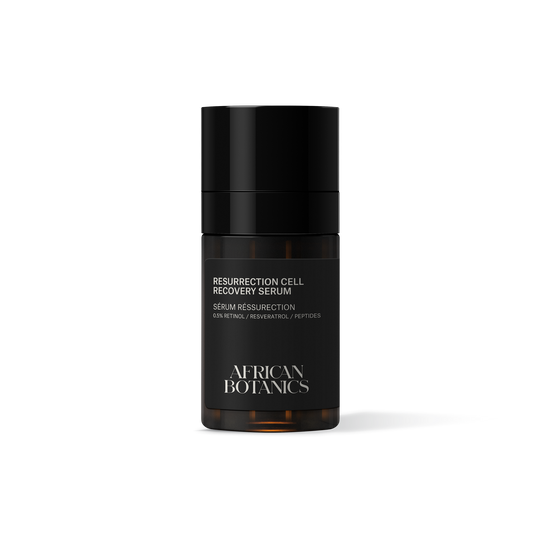
Evening. Resurrection Cell Recovery Serum. Formulated around botanicals that support cellular recovery during the overnight window when repair pathways are most active. Applied after cleansing, before moisturizer.
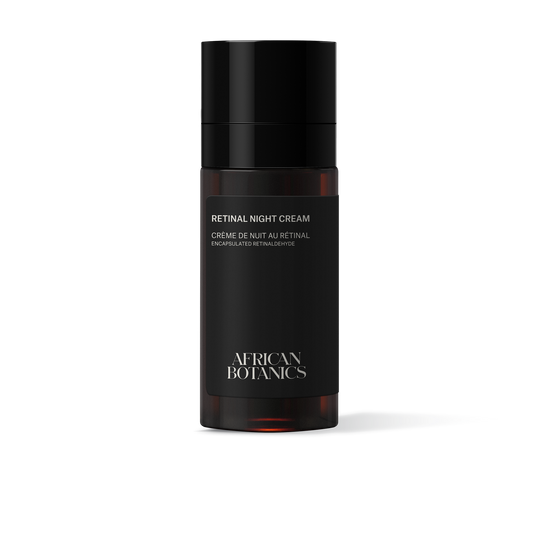
Weekly. Retinal Night Cream. Retinaldehyde to support cellular turnover — the mechanism by which damaged cells are cleared and replaced with new tissue. Twice weekly at first, building to three or four evenings as tolerated.
Skin repair is not passive. The molecular architecture responsible for it is active, energy-intensive, and dependent on the substrates available to it. What summer skincare should do is ensure that when the repair pathways are working — often in the days when you are no longer thinking about sun exposure at all — the resources they need are already there.
The pigmentation, uneven tone, and texture that surface in November are a record of what happened in July, and how skin was treated in the days that followed.
ON THE SCIENCE
Sinclair, R. D., & Winder, A. J. (2020). Photoaging and the mechanism of ultraviolet damage in skin. Dermatologic Clinics, 38(1), 39–48.
Fisher, G. J., Kang, S., Varani, J., Bata-Csorgo, Z., Wan, Y., Datta, S., & Voorhees, J. J. (2002). Mechanisms of photoaging and chronological skin aging. Archives of Dermatology, 138(11), 1462–1470.
Rittié, L., & Fisher, G. J. (2015). Natural and sun-induced aging of human skin. Cold Spring Harbor Perspectives in Medicine, 5(1), a015370.
Krutmann, J., Schikowski, T., Morita, A., & Berneburg, M. (2021). Environmentally-induced (extrinsic) skin aging: Exposomal factors and underlying mechanisms. Journal of Investigative Dermatology, 141(4), 1096–1103.
